Mixing Two Countertop Surfaces in One Austin Kitchen
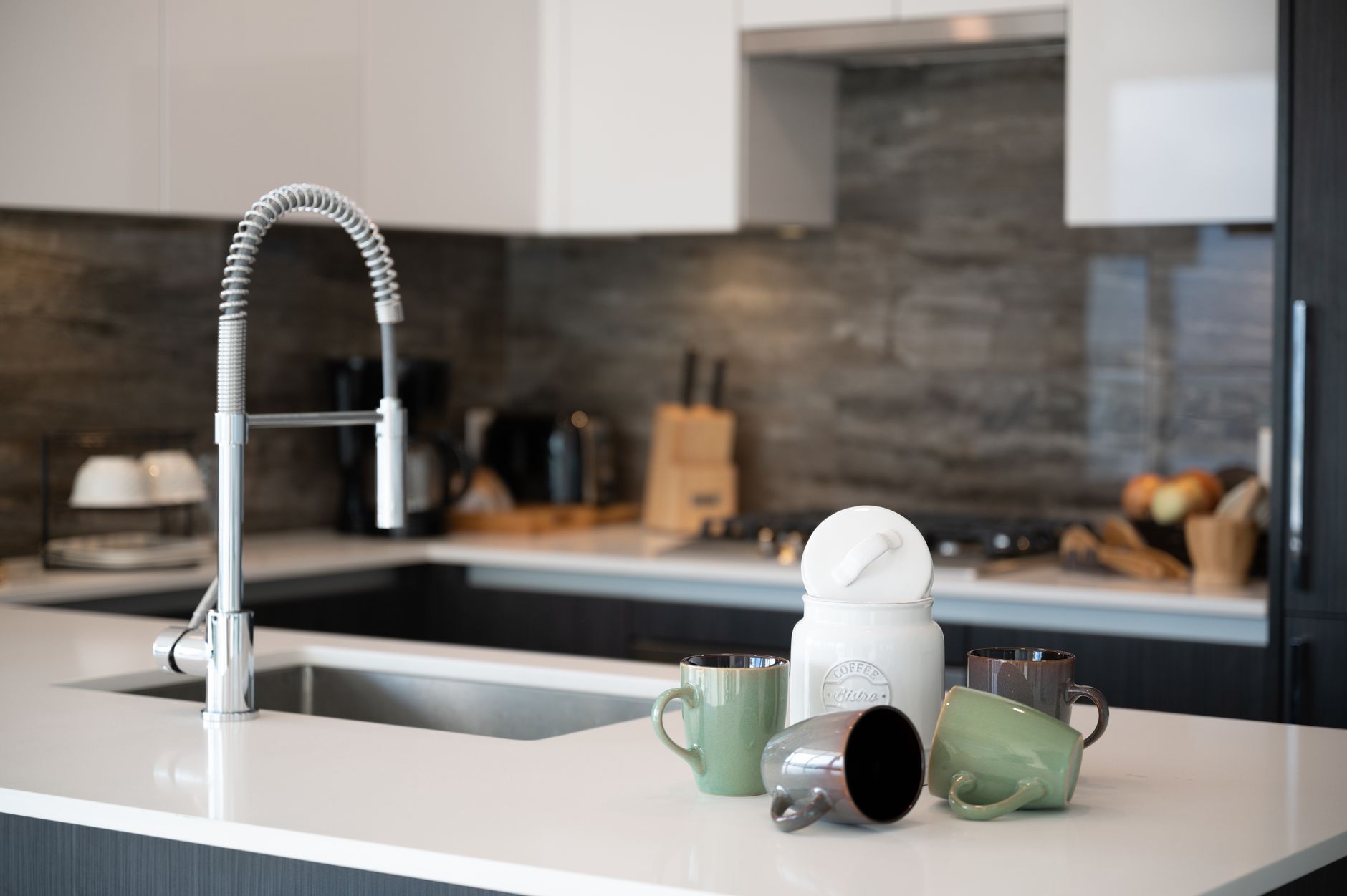
Putting two surfaces in one kitchen is common in Austin, TX, usually a durable perimeter around the sink and range and something softer or more decorative on the island. It works when the two materials share an undertone and a finish, and it fails when they are chosen separately from two different samples. The questions below come up on almost every project that mixes stone.
Why mix surfaces at all?
A perimeter run does the heavy work. It takes the knife cuts, the hot pans, the wet sponge and the dripping faucet. An island can be a gathering spot with less abuse, so it can carry a stone that asks for more care. Marble on an island with quartz or granite around the sink is a pairing seen in Tarrytown and Clarksville kitchens for exactly that reason.
The other reason is the room. A long unbroken run of one pattern can feel heavy, and a second surface breaks it up. A pale island against a darker perimeter makes the island read as furniture, which suits an open plan that runs from the kitchen into a living room.
Which pairings work best?
Pairings that share a base color are easy. Warm white quartz and honed marble sit comfortably together, since both lean toward cream. A gray veined quartzite on the perimeter and a gray porcelain slab on the island does the same job and holds up better to spills. Dark soapstone or honed granite with a pale marble island is a strong contrast that still reads as one design because both finishes are matte.
Pairings that fight are the ones that disagree on finish. A mirror polished island beside a leathered perimeter looks like two kitchens. Match the finish first and the color second. If the two surfaces are different materials, the finish is the one thing a fabricator can control to tie them together.
Does the thickness have to match?
Yes, at the visible edge. Stone is usually cut in two thicknesses, and a quartz or granite top might be built up with a mitered lip to read thicker than it is. Porcelain slab is thin and gets a mitered or laminated edge to match. Where the island meets the perimeter at a corner or an aisle end, the two edges are seen side by side, and a visible difference looks like a mistake instead of a choice.
Overhang depth is the other detail seen side by side. An island that hangs out a foot for stools sits next to a perimeter that overhangs an inch and a half, and that difference is normal. What looks wrong is when the two edges differ in profile. An eased edge on one and a full bullnose on the other draws the eye to the join, so one profile is picked for both surfaces.
How do the care routines differ?
Each surface has its own habits, and living with two means learning two.
- Quartz and porcelain slab take soap and water and little else, and neither needs a sealer.
- Granite and quartzite take a penetrating sealer, checked with a drop of water now and then.
- Marble takes the same sealer and still etches under lemon, vinegar and wine, so it is wiped promptly and kept away from the cooking zone.
- Concrete is sealed or waxed and shows a patina by design.
- Terrazzo with a cement binder is sealed, and a resin binder is not.
A drop test on each surface, done on the same day every few months, tells which one needs attention. If water darkens a surface within a few minutes, the sealer has worn thin.
What about outdoor and indoor tops together?
Patio kitchens near Zilker Park and Barton Springs Pool often sit beside a kitchen indoors, and owners sometimes want one look that carries through a sliding door. Porcelain slab is the common bridge, because it handles heat, sun and rain outside and still looks at home indoors. Natural stone outdoors needs more care. A polished dark granite can get hot enough in direct sun to be uncomfortable, and marble outdoors collects stains from leaves, wine and grill grease.
Where should the join between surfaces fall?
The cleanest answer is a natural break. A step in height, a change of cabinet direction, or the end of a run at an aisle is a place where a surface can change without looking forced. A different surface that starts in the middle of a straight run reads as a patch.
At a peninsula, the corner where the perimeter turns into the peninsula is a bad place for a seam of mixed stone. The more sensible choice is to make the peninsula part of the island group and keep it in the island material.
How does the house affect the choice?
An older bungalow in Hyde Park or Bouldin Creek usually has a modest kitchen, and a second material there can crowd it. One surface with a second used only on a small baking counter or a bar often looks calmer. A mid century house in Travis Heights suits terrazzo or recycled glass on one feature surface with a quiet stone around the rest. Newer homes in Mueller have larger open kitchens that carry a bold island easily.
Light matters in all of them. A kitchen with a west window warms every surface by late afternoon, so a pale marble can look yellow near the glass, while the same marble in a north facing room reads cool. Samples should be viewed in the actual room at the time of day the kitchen is used most, and the island and perimeter samples should sit side by side.
Can the cabinets stay the same?
Often they can. Cabinets in one color with two surfaces is the easy version. Changing the island cabinets to a second color adds a third variable, and three variables are harder to match than two, and the stone then has to answer to the cabinet color, the floor and the second surface all at once. If the island cabinets change color, the island top usually matches whichever perimeter stone is closest in tone.
What does the fabricator need to know?
Both materials should be on the template from the start, even if one is still being chosen. The two surfaces are cut on different days, sometimes in different shops, and a late change means a second template. The sink and range cutouts sit in the perimeter, and the island may take a prep sink or a cooktop, which puts a sink cutout in the softer stone. In that case the narrow strip beside the cutout needs extra support, and an undermount sink adds weight on a thin section.
A seam in either surface should be planned around veining, and any overhang past a certain depth gets a bracket or a support leg. Marble and quartzite islands with an overhang for stools are the most common place for a support leg, since a long unsupported span is where stone cracks.
Is it worth the extra effort?
When the finish and undertone match, a two surface kitchen reads as one considered design. When they do not, it reads as a compromise, so the samples decide it.